
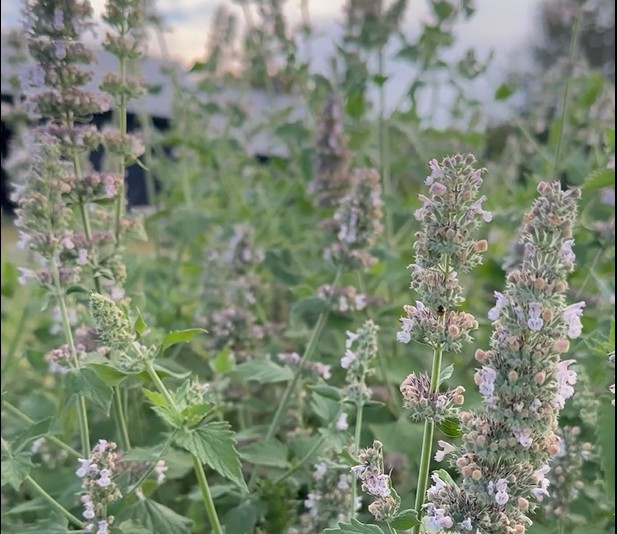
Description
Catnip (Nepeta cataria) – Planting & Care Guide
- Hardiness: Perennial in USDA zones 3–9; blooms summer; attracts cats and pollinators.
- Light: Full sun for best flavor/bloom; tolerates light shade.
- Soil: Well-drained loam/sandy loam; average to poor soil is fine.
- pH: 6.0–7.5. Avoid waterlogged clay; amend with compost + perlite/sand.
- Spacing: 18–24 in (45–60 cm); clump-forming.
- Planting: Set crown at soil level; plant after last frost (spring) or early fall.
From seed
- Timing: Start indoors 6–8 weeks before last frost or direct-sow after frost.
- How: Lightly cover 1/8 in (3 mm); 65–70°F (18–21°C). Germination 7–14 days.
- Thin/Transplant: When 2–3 true leaves; handle gently.
Water
- Moderate. Keep evenly moist until established (4–6 weeks); then water when top inch is dry. Drought tolerant once established.
Feeding
- Light feeder. Mix in compost at planting; avoid high nitrogen (can make plants floppy).
Pruning & control
- Pinch tips early to encourage bushiness.
- Shear back by one-third after first bloom to promote rebloom and prevent self-seeding.
- Deadhead to reduce spread; catnip can self-sow vigorously.
Containers
- Use a well-draining mix (60–70% potting soil + 30–40% perlite). 10–12 in (25–30 cm) pot or larger; full sun.
Pests/diseases
- Generally pest-free; watch for aphids or powdery mildew in humid, crowded conditions. Ensure air flow and avoid overhead watering.
Harvest
- Cut stems just before flowering for peak aroma. Dry in bunches in a warm, airy, shaded place.
Notes
- Consider a simple wire cloche or fencing if neighborhood cats are overly enthusiastic.
- Mulch lightly (1–2 in / 2.5–5 cm), keeping mulch off the crown.
Reviews
There are no reviews yet.